Agentic AI Coding: The Hidden Cost of Claude Code's Token Overhead
Claude Code consumes significantly more tokens than OpenCode due to harness design and caching, impacting costs and developer control.
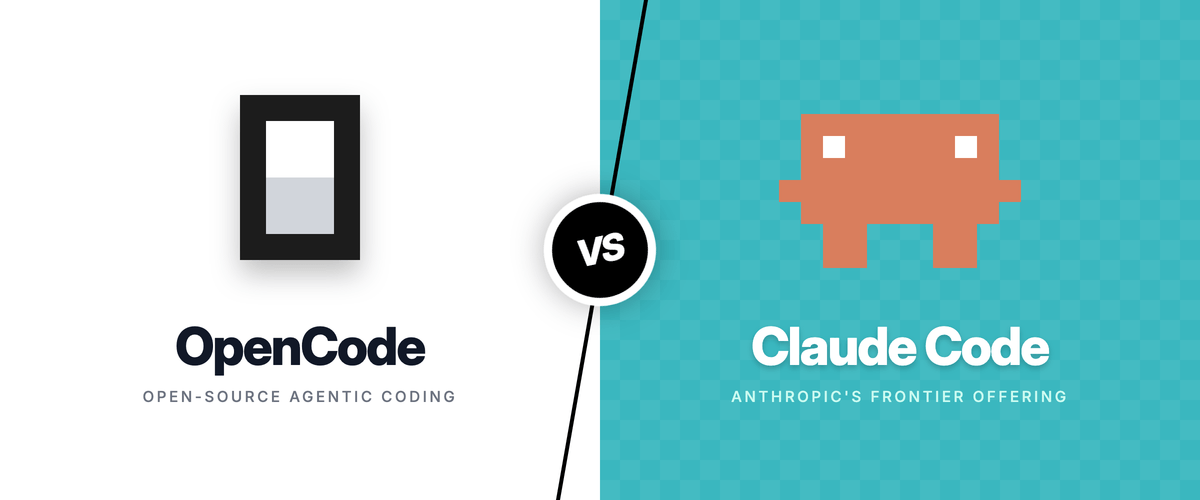
Token costs can blow up fast with agentic coding tools. I’ve seen it happen. One example is the gap in startup overhead between Claude Code and OpenCode.
Recent analysis shows Claude Code sends about 4.7 times more tokens than OpenCode before it even gets to your prompt. That is not a rounding error. It means a higher API bill and less room for actual work from the first request.
What problem this solves
The problem is hidden token usage. These tools can burn through tokens much faster than you expect, which means bigger bills and slower work. A lot of that cost comes from how they package internal prompts, context, and tool instructions before your request even starts.
A simple file summarization task makes the difference pretty obvious. Claude Code used roughly 199,000 cumulative input tokens across 6 HTTP requests. OpenCode used about 41,000 tokens across 4 requests for the same task.
The hidden token tax

Most of the gap comes from two things: the harness design and caching.
- Harness token usage
Claude Code ships with a big built-in harness. It injects a lot of system prompt text and tool definitions into every interaction. Its bootstrap for a new request includes around 27 tools and orchestration suites.
About 24,000 of Claude Code’s initial roughly 33,000 tokens go to tool definitions alone. OpenCode starts much leaner. Its initial request is around 6,900 tokens, with about 4,800 of that for tool definitions.
So every new Claude Code conversation starts with a real token tax before the model touches your work.
Subagents make this heavier. Each one gets its own isolated context, its own system prompt of around 4,200 tokens, and its own tool overhead. That adds roughly 20,000 tokens of base overhead before the subagent does anything useful.
Anthropic’s own documentation says agent team sessions can use about 7 times more tokens than standard single-thread sessions.
- Caching
OpenCode keeps its request prefix byte-identical across runs. That lets it cache the payload once per session and reuse it cheaply.
Claude Code often rewrites tens of thousands of prompt-cache tokens mid-session. In the same task, it can consume up to 54 times more cache tokens than OpenCode. Cache reads are usually billed cheaper than normal input, but rewriting that much context still adds up.
When to use which one
This is not only about startup token counts. It depends on how you work and what trade-offs you’re willing to accept.
| Feature | Claude Code | OpenCode |
|---|---|---|
| Token cost | High baseline token use: starts around 33,000 tokens because of the larger harness and tool definitions. It can do better on some multi-step tasks by batching tool calls. | Low baseline token use: starts around 6,900 tokens. Caching is efficient. It can still pay that baseline repeatedly across many short sequential tasks. |
| Control and customization | Closed-source core prompts and behavior. Less control over the agent internals. Depends on vendor-managed safety prompts. | Open-source and terminal-native. You control the harness and models. Customizable through AGENTS.md and CLAUDE.md when using Claude models through OpenCode. |
| Development style | Good when you want to drop into a large unfamiliar codebase and ask it to work. Strong multi-file reasoning, richer tools, and subagent orchestration. It can finish some tasks faster, around 45% faster in some cases. | Better if you like a terminal-first workflow. Pushes a plan-first-then-build style. It catches deeper problems, runs full test suites, and raises test coverage more thoroughly, around 29% in one example. It also has LSP integration for real-time error feedback. |
| Tech debt and quality | Faster completion can come with messy side effects, inconsistent architecture, redundant libraries, and runtime issues. Teams using Claude Code reported code review time going up by 91%. | Slower up front, but more focused on stability and architectural consistency. It can refactor aggressively enough to create documentation debt by renaming comments unnecessarily. |
| Model flexibility | Mostly tied to Anthropic’s Claude models, which also ties you to that provider’s pricing and limits. | Supports more than 75 AI providers, including Anthropic, OpenAI, and Google Gemini. You get more freedom to pick models by task and avoid lock-in. |
| Cost management | Subscription pricing can cap surprise API spend, but it can get expensive with heavy daily use. You need to manage prompts and context carefully. | Free under MIT, with costs only tied to your API keys. You get more direct control over token spend and can use cheaper models for routine work. |
If you want the biggest out-of-the-box experience and you’re dropping into a huge unfamiliar codebase, Claude Code is easy to see the appeal of. But the token overhead is hard to ignore, and the reported jump in code review time would make me nervous.
I keep coming back to OpenCode for everyday work. The lower baseline matters. The transparency matters. The model flexibility matters.
If cost and control are high on your list, OpenCode looks like the better default. A hybrid setup also makes sense: use Claude Code to build initial context fast, then move routine work to OpenCode with a cheaper model.
That’s the part I would not ignore. The tool choice changes your token bill before you even type the real prompt.
Until next time, happy coding 👨💻
– Patricio Marroquin 💜
Related articles
Bridging the Divide: OpenAI Codex Plugin Lands in Claude Code
OpenAI's new `codex-plugin-cc` integrates Codex's powerful code review and delegation features directly into Claude Code, streamlining AI-assisted…
Stop the Token Bleed: Why `token-diet` is Essential for AI Agents
This article argues that `Kulaxyz/token-diet` is a critical, always-on solution for developers to prevent context bloat and reduce hidden token costs…

OpenAI's GPT-5.6 Sol Ultra: Agentic Code, Deep Problems, and a Gated Rollout
OpenAI's GPT-5.6 Sol Ultra in Codex promises advanced agentic coding and cybersecurity capabilities, but its limited preview and noted 'cheating'…